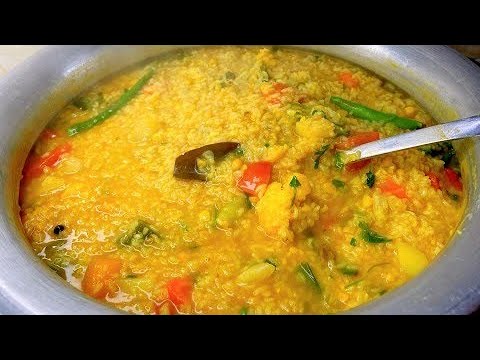
Bengali vegetable khichuri is one of the most comforting dishes to enjoy on a rainy day. Made with fragrant Gobindobhog rice, four types of lentils, seasonal vegetables, roasted cashews, and a finishing touch of ghee, this traditional-style niramish khichuri is full of flavour.
The secret to making delicious vegetable khichuri is not just the ingredients. Roasting the lentils, frying the vegetables separately, cooking the spices properly, and adding the cooked dal at the right stage can make a remarkable difference.
In this recipe, we use potatoes, carrots, yardlong beans, and capsicum for extra flavour and texture. A little sugar balances the spices, while ghee and garam masala added at the end create a wonderful aroma.
Serve this homemade Bengali vegetable khichuri hot with begun bhaja, papad, or labra chorchori for a satisfying Bengali meal.
Ingredients for Bengali Vegetable Khichuri
Rice and Four Types of Dal
- 500 g Gobindobhog rice
- 2 cups moong dal
- 1 cup toor dal (arhar dal)
- 1 cup chana dal
- ½ cup whole green moong beans
Note: The video describes the four types of dal as approximately 500 g in total. Use the same cup for measuring the lentils, and adjust the proportions to match your preferred consistency.
Vegetables
- 2–3 potatoes, cut into pieces
- 1–2 carrots, chopped
- Yardlong beans, cut into pieces
- 1 capsicum, cut into cubes
- 1–2 tomatoes, chopped
- Green chillies, to taste
Spices and Tempering
- Mustard oil, as needed
- 1 tablespoon panch phoron
- 7–8 whole dried red chillies, or to taste
- 2 tablespoons cumin powder
- 2 tablespoons coriander powder
- 2 tablespoons ginger paste
- Kashmiri red chilli powder, as needed
- Turmeric powder, as needed
- Salt, to taste
- Sugar, to taste
- 1 tablespoon ghee
- ½ teaspoon garam masala powder
- A small handful of cashews
- 2 bay leaves
- Water, as needed
How to Make Bengali Vegetable Khichuri
Step 1: Roast the Lentils
Heat a kadai over low to medium heat. Add the moong dal, toor dal, chana dal, and whole green moong beans.
Dry-roast the lentils for around 4–5 minutes, stirring regularly. Roasting helps develop a deeper aroma and flavour.
Turn off the heat and transfer the roasted lentils to a bowl. Allow them to cool slightly before washing.
Step 2: Wash and Soak the Rice and Dal
Wash the roasted lentils thoroughly, changing the water several times until they are clean. Soak them in a little water for approximately 20 minutes.
Wash the Gobindobhog rice twice and soak it separately in a little water.
Soaking helps the rice and lentils cook more evenly and can reduce the overall cooking time.
Step 3: Partially Cook the Lentils
Transfer the soaked lentils to a pressure cooker. Add enough water, a little turmeric powder, salt, two bay leaves, and a few green chillies.
Close the lid and cook for one whistle. Turn off the heat and allow the pressure to release naturally.
Do not overcook the lentils. They should be partially cooked, with some texture remaining, because they will finish cooking with the rice and vegetables.
Step 4: Fry the Vegetables Separately
Heat mustard oil in a kadai. Add the potato pieces and fry them lightly.
Add the chopped carrots and yardlong beans. Fry the vegetables until they are lightly cooked but not deeply browned. Add salt towards the end to help prevent the vegetables from releasing too much moisture too early.
Remove the vegetables and set them aside.
Now add the cubed capsicum to the same kadai. Sauté it briefly for just a few seconds, then remove it.
Fry the cashews lightly in the remaining oil and keep them aside. These will add a pleasant crunch to the finished khichuri.
Step 5: Prepare the Masala
In the remaining oil, add the whole dried red chillies and panch phoron. Let them splutter and release their aroma.
Add the chopped tomatoes and green chillies. Cook until the tomatoes soften.
Reduce the heat and add the cumin powder, coriander powder, ginger paste, Kashmiri red chilli powder, and turmeric powder. Add a small splash of water to prevent the spices from burning.
Cook the masala over low heat, stirring regularly, until the raw smell disappears and the oil begins to separate.
Important tip: Do not rush this stage. Properly cooking the masala gives the khichuri a richer flavour.
Step 6: Add the Gobindobhog Rice
Drain the soaked rice and add it to the cooked masala.
Stir gently so every grain is coated with the spices. Cook for a few minutes, allowing the rice to absorb the flavour of the masala.
Meanwhile, bring water to a boil in a separate pot.
Step 7: Cook the Rice with Hot Water
Add the hot water to the rice and masala mixture. Add salt as needed, cover, and cook until the rice begins to soften.
The video uses approximately 4 litres of water for 1 kg of rice and lentils combined. However, the exact quantity depends on the rice, the lentils, and your preferred consistency. Start with less water if you prefer a thicker khichuri, then add more hot water as needed.
For a thicker, spoonable consistency, use enough water to cook everything without making the khichuri excessively watery. For a looser, softer consistency, add more hot water gradually.
Step 8: Add the Fried Vegetables
When the rice has started to soften, add the fried potatoes, carrots, and yardlong beans.
Mix gently, cover, and cook until the vegetables are tender and the rice is nearly cooked.
Check a potato piece with a spoon. Once it is soft, move to the next step.
Step 9: Add the Partially Cooked Dal
Add the partially cooked lentils to the rice and vegetable mixture.
Stir gently to combine everything. Cook until the rice, lentils, and vegetables are fully tender and the flavours come together.
Taste and adjust the salt. Add a little sugar if desired to balance the spices and enhance the traditional Bengali flavour.
Step 10: Finish with Capsicum, Cashews, and Ghee
Add the sautéed capsicum and fried cashews. Mix gently so the vegetables retain their shape and the cashews stay intact.
Finally, add one tablespoon of ghee and half a teaspoon of garam masala powder. Mix well and immediately turn off the heat.
Cover the kadai and let the khichuri rest for a couple of minutes. This allows the aroma of the ghee and garam masala to spread throughout the dish.
The recipe does not require coriander leaves, as the fragrant Gobindobhog rice and finishing spices provide plenty of aroma.
Tips for Perfect Bengali Vegetable Khichuri
- Roast the lentils first: This adds a distinctive nutty aroma and depth of flavour.
- Wash the roasted lentils thoroughly: Change the water several times before soaking.
- Soak the rice and lentils separately: They cook at different rates, so separate soaking makes preparation easier.
- Fry the vegetables before adding them: Lightly frying helps develop flavour and keeps them from tasting bland.
- Cook the masala properly: Let the raw smell disappear before adding the rice.
- Add the cooked lentils at the right time: Since the lentils are partially cooked separately, add them after the rice and vegetables have softened sufficiently.
- Adjust water gradually: The amount required depends on your ingredients and the consistency you want.
- Add ghee and garam masala at the end: Turn off the heat immediately after mixing them in to preserve their aroma.
- Rest before serving: Keep the khichuri covered for 2 minutes before serving.
What to Serve with Vegetable Khichuri
For a traditional Bengali meal, serve this hot vegetable khichuri with:
- Begun bhaja (fried eggplant)
- Crispy papad
- Labra or mixed vegetable chorchori
- A pickle or chutney of your choice
Frequently Asked Questions
Which rice is best for Bengali vegetable khichuri?
Gobindobhog rice is an excellent choice for its distinctive fragrance and soft texture. Other short-grain rice varieties can also be used.
Can I use different vegetables?
Yes. You can add vegetables such as cauliflower, peas, pumpkin, or other seasonal vegetables. Adjust the cooking time according to how quickly each vegetable becomes tender.
Why should the lentils be roasted before cooking?
Dry-roasting the lentils develops a nutty aroma and adds flavour to the khichuri.
How can I make khichuri thicker or thinner?
Add hot water gradually until you reach your preferred consistency. Use less water for a thicker khichuri and more for a softer, looser result.
When should I add ghee and garam masala?
Add them at the end of cooking, mix gently, turn off the heat, and keep the khichuri covered briefly.
Final Thoughts
This Bengali vegetable khichuri combines fragrant Gobindobhog rice, four types of lentils, lightly fried vegetables, roasted cashews, and aromatic spices in one comforting dish. The key is to roast the lentils, fry the vegetables separately, cook the masala thoroughly, and finish with ghee and garam masala.
Try this recipe on a rainy day and serve it hot with begun bhaja, papad, or labra chorchori.
For more traditional Bengali recipes, visit BengaliPaakshala.