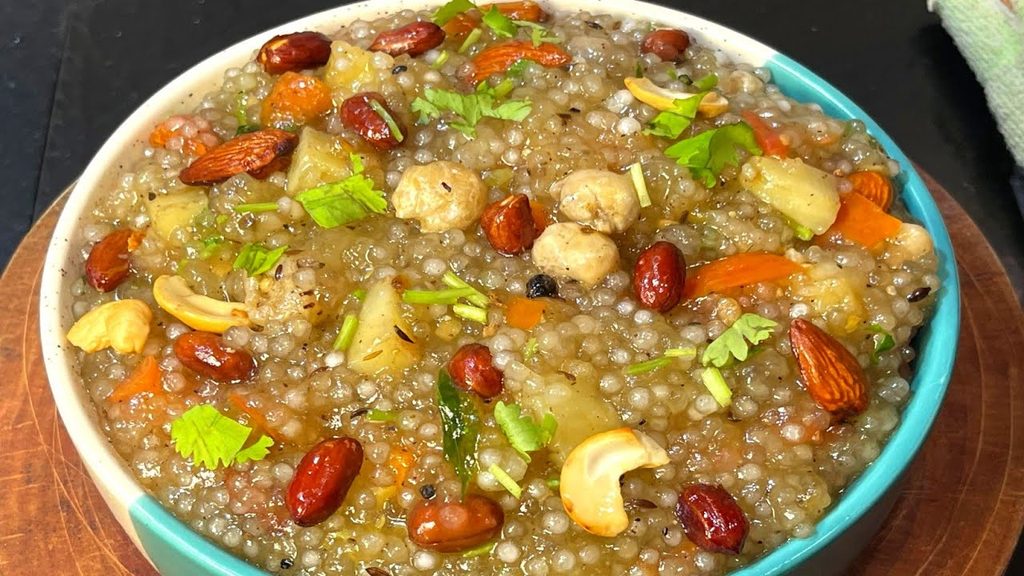
Want to make perfectly fluffy Sabudana Khichdi without the pearls sticking together or turning mushy? The secret lies in soaking the sabudana correctly and using the right amount of water. With this easy recipe, you can prepare delicious, non-sticky Sabudana Khichdi with soft potatoes, carrots, roasted nuts, curry leaves, and a refreshing touch of lemon.
This vegetarian recipe is especially popular during fasting days in India. Made with small tapioca pearls, ghee, peanuts, cashews, almonds, makhana, and fresh vegetables, it offers a satisfying combination of textures and flavours.
The best part is that you don’t need large-sized sabudana to achieve a beautiful result. Small-sized pearls can also remain separate and look like little pearls when soaked and cooked correctly.
Follow the step-by-step method below to prepare flavourful Sabudana Khichdi at home.
Ingredients for Sabudana Khichdi
For soaking
- 1 cup small-sized sabudana (tapioca pearls)
- 1 cup water, for soaking
For roasting the nuts
- 3 tablespoons ghee, for roasting the nuts
- Peanuts, as needed
- 2 tablespoons cashews
- 2 tablespoons almonds
- 2 tablespoons makhana (fox nuts)
For the khichdi
- 1 additional tablespoon ghee
- ½ teaspoon cumin seeds
- 2 whole dried red chillies
- 1 large potato, cut into small cubes
- 1 carrot, chopped
- Salt to taste
- A few curry leaves
- 2 medium tomatoes, chopped
- 1 tablespoon finely chopped ginger
- 7–8 green chillies, finely chopped, or to taste
- 3 cups warm water, as described in the original recipe
- 1 tablespoon black pepper powder
- Black salt (sendha namak for fasting), to taste
- Fresh coriander leaves, chopped
- Juice of ½ lemon
Note: The original recipe does not specify the exact quantity of peanuts or carrot. The soaking method uses equal measured volumes of sabudana and water. The cooking water quantity is reproduced from the source recipe, but it may need adjustment depending on the sabudana variety and how much moisture remains after soaking.
How to Make Perfect Sabudana Khichdi
Step 1: Wash the sabudana gently
Take 1 cup of small-sized sabudana in a bowl. Rinse it twice with water, using your hands gently.
Avoid rubbing the pearls forcefully. Excessive rubbing can damage them and release starch, making the finished khichdi more likely to become sticky.
Drain the washing water completely.
Step 2: Soak using the correct water ratio
Add 1 cup of water to the washed sabudana. The water measurement should match the volume of sabudana.
Cover the bowl and leave it to soak for approximately one hour, as in the original recipe.
After soaking, check the pearls. They should have absorbed the water and become soft enough to cook, while still retaining their individual shape. If your particular brand needs more soaking time, follow the packet instructions and check the texture rather than adding water automatically.
Proper soaking is the most important step in making fluffy, non-sticky Sabudana Khichdi.
Step 3: Roast the peanuts
Heat 3 tablespoons of ghee in a kadai. Add the peanuts and roast them until cooked and fragrant.
If you are using previously roasted peanuts, warm them briefly in the ghee to enhance their flavour.
Remove the peanuts and set them aside.
Step 4: Roast the cashews, almonds, and makhana
In the remaining ghee, add the cashews, almonds, and makhana.
Roast them gently until they become lightly golden and crunchy. Stir frequently so that they do not burn.
Transfer the roasted nuts and makhana to a plate and keep them aside.
Step 5: Prepare the tempering
Add another tablespoon of ghee to the kadai.
Keep the flame low and add the cumin seeds and whole dried red chillies. Allow the cumin to release its aroma without burning.
Step 6: Cook the potatoes and carrots
Add the chopped potato and cook over low heat, stirring occasionally.
When the potato begins to soften, add the chopped carrot and a little salt. Continue cooking until the vegetables become tender. This may take approximately 6–7 minutes, depending on the size of the pieces.
Keep the heat moderate and stir as needed to prevent the vegetables from sticking.
Step 7: Add curry leaves, tomatoes, ginger, and green chillies
Add the curry leaves and stir briefly.
Next, add the chopped tomatoes, ginger, and green chillies. Mix everything well and cook until the tomatoes begin to soften.
Avoid cooking the tomatoes until they completely break down if you prefer some texture in the finished khichdi.
Step 8: Add the soaked sabudana
Add the soaked and drained sabudana to the vegetable mixture.
Gently stir to combine the pearls with the potatoes, carrots, tomatoes, and spices.
Add black salt and black pepper powder. Mix carefully to avoid crushing the pearls.
Step 9: Add warm water carefully
The original recipe adds approximately 3 cups of warm water at this stage. However, because properly soaked sabudana has already absorbed water, adding all this liquid may make the khichdi too soft or mushy.
For a non-sticky result, first check the soaked pearls and the moisture in your pan. Add only the amount of warm water needed for the sabudana and vegetables to cook without drying out. If your pearls are already soft and the mixture is moist, you may need very little additional water.
Stir gently and allow the mixture to heat through. Avoid vigorous mixing, which can break the pearls and release starch.
Step 10: Finish with roasted nuts and lemon
Once the sabudana is cooked and the pearls look translucent, add the roasted peanuts, cashews, almonds, and makhana.
Add fresh coriander leaves and the juice of half a lemon. Mix gently to distribute the flavours.
Cover the kadai and let the khichdi rest for approximately two minutes.
Your Sabudana Khichdi is ready to serve.
Tips for Non-Sticky Sabudana Khichdi
- Measure the water carefully: The original soaking ratio is 1 cup of sabudana to 1 cup of water.
- Wash gently: Avoid rubbing the pearls aggressively.
- Drain excess water: Extra water left after soaking can make the dish sticky.
- Check the pearls before cooking: They should be soft enough to cook but should still retain their shape.
- Cook the vegetables first: Make sure the potato and carrot are tender before adding the sabudana.
- Avoid adding too much cooking water: Properly soaked sabudana generally does not need several cups of additional water.
- Stir gently: Excessive stirring can break the pearls and release starch.
- Add lemon at the end: It provides a fresh, tangy flavour.
- Use fasting salt when appropriate: For fasting observances, use sendha namak if it is permitted under your tradition.
Frequently Asked Questions
Can I use small sabudana to make khichdi?
Yes. Small-sized sabudana can be used to prepare khichdi. The key is to soak it properly and avoid excess water during cooking.
What is the correct water ratio for soaking sabudana?
This recipe uses one cup of water for one cup of sabudana by volume. Soaking needs can vary depending on the brand and pearl size, so check the texture before cooking.
Why does my Sabudana Khichdi become sticky?
Common reasons include excess water, insufficient draining, aggressive washing, and excessive stirring. Measuring the soaking water correctly and cooking gently can help keep the pearls separate.
Can I make Sabudana Khichdi with ghee?
Yes. Ghee is used in this recipe for roasting the nuts and cooking the vegetables. You can use oil instead if preferred, although the flavour will differ.
Is this recipe suitable for fasting?
It can be adapted for fasting by using sendha namak and checking that all the ingredients are permitted under your fasting tradition. Fasting rules vary, so adjust the recipe accordingly.
Final Thoughts
This Sabudana Khichdi Recipe combines fluffy tapioca pearls, tender vegetables, crunchy nuts, and a fresh lemon finish. With careful soaking and gentle cooking, you can prepare a delicious vegetarian dish for breakfast, a light meal, or a fasting day.
Try this recipe at home and enjoy homemade Sabudana Khichdi with every pearl cooked to the right texture.
For more Bengali recipes, vegetarian dishes, and easy home-cooking ideas, follow BengaliPaakshala.