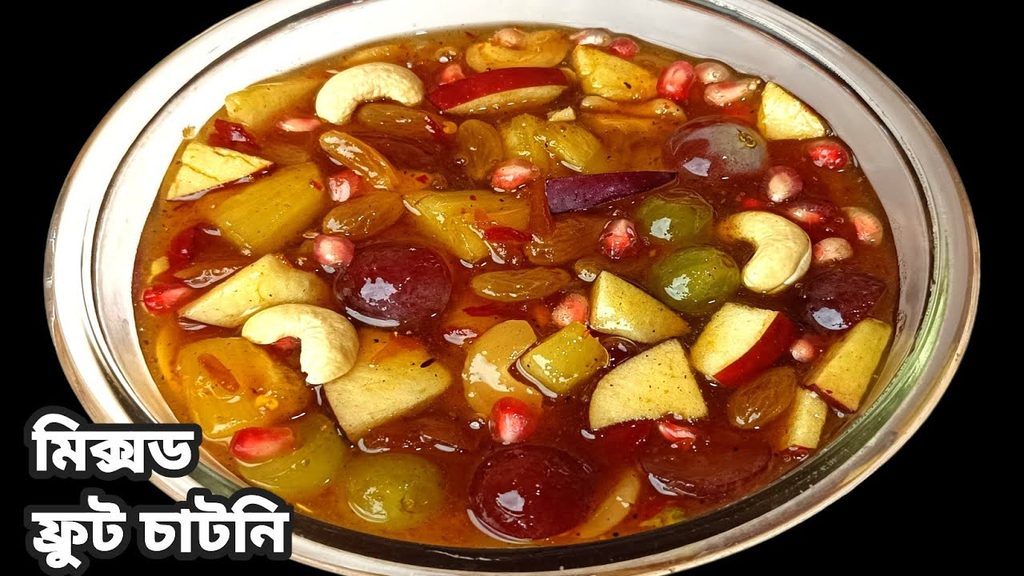
Bengali mixed fruit chutney is a classic dish often served at Bengali weddings, family gatherings, and festive meals. Made with pineapple, dates, aam papad, cashews, raisins, and fresh fruits, this sweet and tangy chutney is a delicious way to finish a traditional Bengali meal.
The secret to achieving that special অনুষ্ঠান বাড়ির (wedding-style) flavour is to cook the firmer fruits first, allow the sugar syrup to thicken, and add the delicate fruits only after the chutney has cooled. A special roasted spice blend made with panch phoron and dried red chilli adds a distinctive aroma, while a little lemon juice gives the chutney a refreshing tang.
Follow this easy BengaliPaakshala recipe to make a colourful mixed fruit chutney at home.
Ingredients for Bengali Mixed Fruit Chutney
Fruits and Dry Fruits
- Pineapple, cut into small pieces
- Apple, thinly sliced
- Green and black grapes
- Dates, chopped
- Aam papad (dried mango sheets), cut into pieces
- Pomegranate seeds
- Cherries
- Cashews
- Raisins
For the Chutney
- Approximately 1½ large cups of water
- 1 bowl of sugar, or to taste
- A small pinch of salt
- A little fresh lemon juice
Special Roasted Spice Blend
- 1 teaspoon panch phoron
- 1 dried red chilli
Note: The original video does not specify the exact quantities of the individual fruits, dry fruits, or lemon juice. Adjust the ingredients according to your preferred sweetness and the amount of chutney you want to make.
How to Make Bengali Mixed Fruit Chutney
Step 1: Prepare the Fruits
Wash the fruits thoroughly. Cut the pineapple and dates into small pieces, slice the apple thinly, and cut the aam papad into bite-sized pieces.
Keep the grapes, pomegranate seeds, cherries, and apple separate from the fruits that need longer cooking.
This helps preserve the colour, texture, and freshness of the more delicate fruits.
Step 2: Prepare the Special Roasted Masala
Heat a dry frying pan over low to medium heat.
Add 1 teaspoon of panch phoron and 1 dried red chilli. Dry-roast briefly until fragrant, taking care not to burn the spices.
Allow the mixture to cool, then grind it into a fine powder. Set aside.
This aromatic spice blend is the special finishing masala that gives the chutney its distinctive Bengali flavour.
Step 3: Heat the Water and Cook the Firmer Fruits
Pour approximately 1½ large cups of water into a pan and heat until warm.
Add the pineapple, dates, aam papad, cashews, and raisins. Add a small pinch of salt and mix gently.
Cover and cook for approximately 3–4 minutes.
Open the lid and check the fruit. The pineapple should be softening, while the dates and aam papad should retain some shape.
If necessary, cover and cook for another 1–2 minutes. Avoid overcooking, as the fruits may become mushy.
Step 4: Add the Sugar
Add one bowl of sugar, adjusting the amount to your taste.
Stir gently until the sugar dissolves and combines with the fruit juices to form a sweet syrup.
Allow the chutney to simmer until the syrup reaches your preferred consistency. It will thicken further as it cools, so avoid reducing it excessively.
Step 5: Add the Roasted Masala and Lemon Juice
Turn off the heat.
Add the prepared panch phoron and dried red chilli powder. Add a little fresh lemon juice and mix thoroughly.
Important tip: Add the lemon juice after turning off the heat. This helps preserve its fresh flavour and avoids prolonged boiling after the juice is added.
Remove any lemon seeds that may have fallen into the chutney.
Step 6: Cool the Chutney
Allow the cooked fruit mixture to cool until it is no longer hot.
This step is important because the remaining fruits are added after cooling to help preserve their fresh colour and texture.
Step 7: Add the Remaining Fresh Fruits
Once the chutney has cooled, add the thinly sliced apple, green and black grapes, pomegranate seeds, and cherries.
Mix gently so the fruits are evenly distributed without crushing them.
The contrast between the soft, syrupy pineapple and dates and the fresh, colourful fruits makes this chutney especially appealing.
Step 8: Serve the Mixed Fruit Chutney
Transfer the chutney to a serving bowl.
For the best flavour, allow it to cool completely before serving. If you prepare it in advance, refrigerate it in a clean, covered container and serve chilled or cool.
Enjoy this sweet and tangy Bengali mixed fruit chutney as part of a traditional Bengali meal.
Tips for Perfect Wedding-Style Fruit Chutney
- Cook the fruits in stages: Pineapple, dates, and aam papad can be cooked first, while delicate fruits are added after cooling.
- Roast the spices carefully: Panch phoron and dried red chilli should become aromatic without burning.
- Balance the sweetness: Start with the suggested bowl of sugar and adjust according to the sweetness of your fruit.
- Do not overcook the fruit: The cooked fruits should soften without completely losing their shape.
- Add lemon juice at the end: Turn off the heat first to retain a fresher citrus flavour.
- Add the fresh fruits only after cooling: This helps maintain their colour and texture.
- Remember that the syrup thickens as it cools: Stop cooking when it is slightly looser than your desired final consistency.
What to Serve with Bengali Mixed Fruit Chutney
This chutney is a traditional accompaniment to a Bengali meal. Serve it after dishes such as rice, dal, vegetable preparations, fish curry, or mutton curry.
It is also a lovely addition to festive lunches, wedding-style menus, and family gatherings.
Frequently Asked Questions
What makes Bengali wedding-style fruit chutney special?
The combination of cooked pineapple, dates, aam papad, sugar syrup, roasted panch phoron, and fresh fruits creates a sweet, tangy, aromatic chutney with contrasting textures.
Can I use raw mango instead of aam papad?
Yes. Raw mango can be used as an alternative, as mentioned in the original recipe. However, its tartness and cooking time may differ, so adjust the sugar and cooking time according to taste.
Why are some fruits added after the chutney cools?
Adding apple, grapes, pomegranate seeds, and cherries after cooling helps preserve their colour and fresh texture.
Can I adjust the amount of sugar?
Yes. The amount depends on the natural sweetness of the fruit and your preference. Add sugar gradually and taste as the syrup develops.
How should I store homemade fruit chutney?
Cool it promptly and refrigerate it in a clean, covered container. Because this recipe contains fresh fruit and does not specify a tested preservation process, do not assume it is shelf-stable or suitable for long-term storage.
Final Thoughts
Bengali mixed fruit chutney is a delicious combination of sweet, tangy, and aromatic flavours. By cooking the firmer fruits first, adding the roasted spice blend and lemon juice at the end, and mixing in the fresh fruits after cooling, you can recreate the special style often served at Bengali celebrations.
Try this easy recipe at home and enjoy it with your favourite Bengali meal.
For more traditional Bengali recipes, visit BengaliPaakshala.